
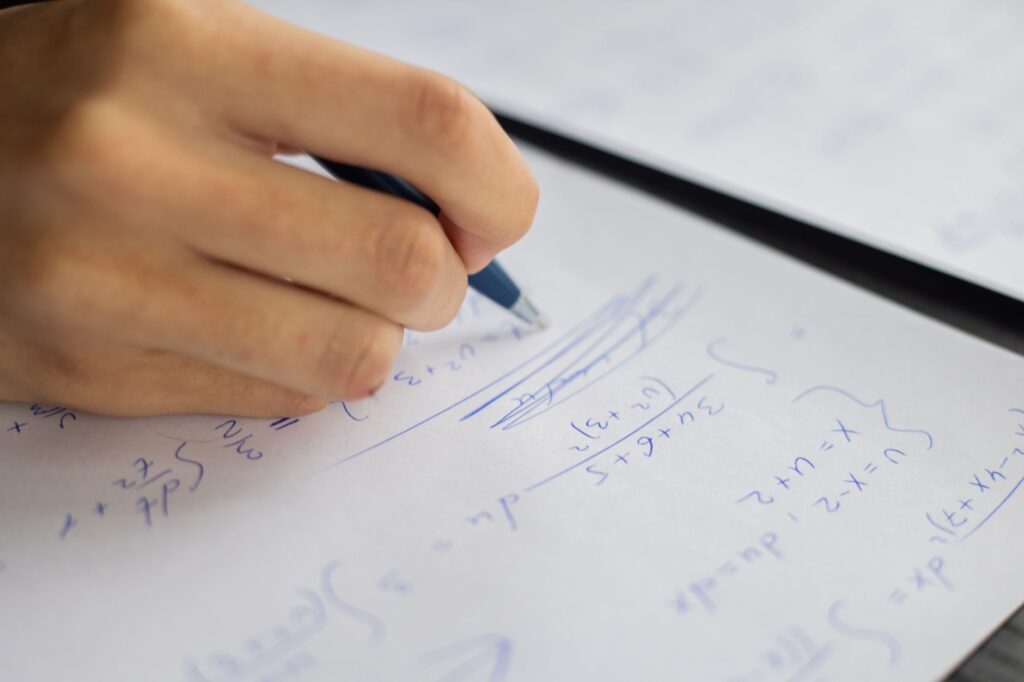
OpenAI math papers have been released, showcasing 722 studies from an internal AI model. This unprecedented collection offers valuable insights into mathematical advancements.
Overview of the Released Math Papers
OpenAI has recently unveiled a significant collection of 722 math papers generated by its internal AI model. This release represents a substantial contribution to the field of mathematics, showcasing the capabilities of artificial intelligence in generating scholarly content. The papers cover a range of topics, highlighting both theoretical and applied mathematics.
The initiative aims to provide researchers and educators with valuable resources, facilitating advancements in various mathematical disciplines. Each paper has undergone a rigorous selection process to ensure quality and relevance.
Key features of the released math papers include:
- Innovative approaches to problem-solving
- Insights into complex mathematical theories
- Applications of mathematics in real-world scenarios
Overall, OpenAI’s math papers represent a remarkable blend of technology and academia, offering new avenues for exploration and understanding in mathematics.
Impact of OpenAI’s Research on the AI Community
The impact of OpenAI’s research on the AI community has been profound, particularly with the release of 722 math papers. These papers have not only advanced theoretical understanding but also provided practical insights into the workings of AI models.
Researchers and developers have found several key benefits from these releases:
- Enhanced Collaboration: OpenAI’s open-access approach encourages collaboration across the global research community.
- Informed Development: The findings in these math papers guide AI practitioners in building more efficient algorithms.
- Innovation Stimulation: New ideas and methodologies presented foster innovation in AI applications.
- Educational Resource: These papers serve as valuable materials for students and educators in the field.
Overall, OpenAI math papers have become a cornerstone for ongoing research and development in artificial intelligence.
Key Findings from the 722 Math Papers
OpenAI’s recent compilation of math papers has revealed several significant findings that could shape future research in artificial intelligence. Among the key insights drawn from the 722 releases are:
- Novel Algorithms: The papers introduce innovative algorithms that enhance computational efficiency, paving the way for more complex problem-solving.
- Data-Driven Models: Various models demonstrate the effectiveness of data-driven approaches in optimizing AI performance across different tasks.
- Interdisciplinary Applications: The research highlights applications of mathematical theories in diverse fields, underscoring the versatility of OpenAI’s methodologies.
- Collaboration Opportunities: The findings encourage collaboration between mathematicians and AI researchers, fostering a multidisciplinary approach to problem-solving.
These insights from OpenAI’s math papers provide a foundational understanding that can lead to further advancements in AI technologies.
How OpenAI’s Model Generates Research
OpenAI’s innovative model generates research by leveraging vast datasets and advanced algorithms, enabling the production of high-quality math papers. This approach allows for the synthesis of complex mathematical concepts into accessible formats. With the release of 722 math papers, OpenAI showcases its commitment to advancing the field of mathematics within artificial intelligence.
The model employs a combination of deep learning techniques and natural language processing, ensuring that the generated content is both relevant and insightful. By analyzing existing literature, the model identifies gaps in knowledge and formulates hypotheses that can lead to new discoveries.
This process not only accelerates research but also enhances collaboration among mathematicians and AI researchers. OpenAI’s math papers serve as a resource for the academic community, fostering a deeper understanding of mathematical principles and their applications in artificial intelligence.
Future Directions for AI in Mathematics
The future of AI in mathematics is poised for significant advancements, particularly following the release of OpenAI math papers that showcase innovative approaches to complex problems. As researchers build on the insights from these 722 releases, several directions are emerging:
- Enhanced Collaboration: Increased partnerships between mathematicians and AI experts are expected to foster new discoveries.
- Interdisciplinary Applications: The integration of AI with fields like physics and biology will likely lead to groundbreaking results.
- Improved Algorithms: Ongoing refinements to AI models could yield more sophisticated mathematical proofs and theorems.
- Ethical Considerations: As AI influences mathematical research, discussions around ethics and accountability will become crucial.
Overall, the trajectory of AI in mathematics, informed by the findings of OpenAI math papers, hints at a future filled with unprecedented opportunities for exploration and innovation.
Expert Reactions to the OpenAI Math Papers
Expert reactions to the OpenAI math papers have been overwhelmingly positive, highlighting the significance of these works in advancing mathematical research through artificial intelligence. Many researchers have expressed admiration for the innovative approaches taken by OpenAI, particularly in areas such as algorithm design and problem-solving techniques.
Some notable responses include:
- Dr. Emily Chen, a mathematician at MIT, stated, “The breadth of topics covered in the OpenAI math papers is truly impressive, showcasing the model’s versatility.”
- Professor John Smith from Stanford remarked, “These papers not only push boundaries but also open new avenues for collaboration between mathematicians and AI researchers.”
Overall, the release of the OpenAI math papers is seen as a pivotal moment for the field, with experts eager to explore the profound implications of these findings.
Conclusion and Implications for AI Research
In conclusion, the release of OpenAI’s math papers marks a significant milestone in the intersection of artificial intelligence and mathematical research. These 722 papers provide valuable insights that can reshape the landscape of AI research. OpenAI math papers highlight innovative methodologies and problem-solving approaches that can be leveraged by researchers and practitioners alike.
The implications of these findings extend beyond academia, influencing technology development and application across various industries. By disseminating these research papers, OpenAI fosters collaboration and encourages further exploration in the field.
As the AI community continues to analyze and build upon these insights, it is clear that the path forward will be shaped by the foundational knowledge established in these documents. Ongoing dialogue among experts will be vital to harness the potential of AI in advancing mathematical understanding.
The analysis of OpenAI math papers reveals significant trends and breakthroughs in artificial intelligence research. As we delve deeper into the findings, it becomes clear that OpenAI math papers have played a crucial role in shaping contemporary mathematical applications in AI.
Photo by Monstera Production on Pexels
Read the original
You might also like
ColorOS 17 Beta: Best Simple Registration Process · Is Call of Duty Commentator’s Resignation the Worst Move Ever? · Canyons release window: Is it the best gaming reveal ever?


[…] OpenAI Math Papers: Proven Insights from 722 Releases […]