
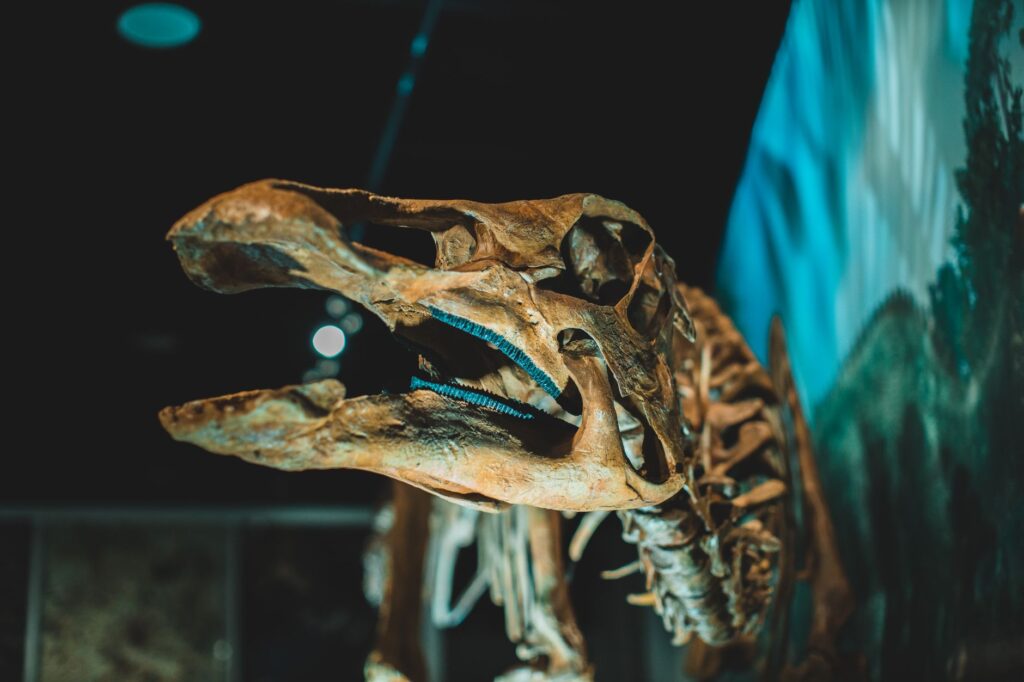
The 165-million-year-old fossil has captured the attention of scientists, revealing a broad swimming tail and bony structures that provide valuable insights into prehistoric creatures.
What the Fossil Reveals
The recent examination of a 165-million-year-old fossil from China has unveiled remarkable insights into the evolution of ancient aquatic creatures. This fossil, which showcases a broad swimming tail and bony structures, provides crucial evidence regarding the adaptation of marine species during the Mesozoic era.
Researchers noted several key features that highlight the significance of this discovery:
- Swimming Adaptations: The broad tail suggests advanced swimming capabilities, allowing the creature to navigate effectively in its aquatic environment.
- Bony Structures: The presence of bony features indicates a complex skeletal system, which may have provided additional support and flexibility during movement.
- Ecosystem Insights: This fossil adds to our understanding of the biodiversity that existed during its time, shedding light on the ecological dynamics of ancient marine habitats.
As scientists continue to analyze the 165-million-year-old fossil, it is clear that this discovery holds the potential to reshape our understanding of evolutionary history and the adaptations of prehistoric life forms.
The Importance of Fossils in Science
Fossils hold immense significance in the field of science, providing invaluable insights into the history of life on Earth. The discovery of a 165-million-year-old fossil not only sheds light on the anatomy of ancient creatures but also aids in understanding evolutionary processes.
These remnants serve as a window into past ecosystems, revealing how species adapted to their environments and interacted with one another. By studying fossils, scientists can reconstruct ancient habitats and gain a clearer picture of climatic changes over millions of years.
Moreover, fossils contribute to our knowledge of biodiversity, showcasing the variety of life forms that once roamed the planet. Each finding, such as the recent examination of the Chinese fossil with a broad swimming tail and bony structures, enriches our understanding of evolutionary milestones.
In essence, the study of fossils is crucial for piecing together the complex puzzle of Earth’s biological history, making discoveries like the 165-million-year-old fossil not just fascinating, but fundamental to scientific progress.
How Fossils Inform Our Understanding of Evolution
The study of fossils, such as the 165-million-year-old fossil discovered in China, plays a crucial role in enhancing our understanding of evolutionary processes. These ancient remnants provide invaluable insights into the morphology and behaviors of extinct species, allowing scientists to piece together the history of life on Earth.
Fossils serve as a record of changes over time, revealing how organisms adapted to their environments. They help researchers identify common ancestors among different species, illustrating the branches of the evolutionary tree. By analyzing characteristics such as bone structure, size, and even soft tissue, paleontologists can infer how certain traits evolved.
Moreover, fossils can shed light on environmental conditions during their time, offering context for evolutionary changes. For instance, the structure of the swimming tail found in the 165-million-year-old fossil indicates adaptations to aquatic life, suggesting a diverse range of habitats that ancient creatures occupied.
Overall, each fossil discovery contributes to a more comprehensive understanding of life’s complex evolutionary journey.
Recent Discoveries in Paleontology
Recent discoveries in paleontology continue to unveil the mysteries of our planet’s ancient past. The 165-million-year-old fossil examined by scientists in China has provided remarkable insights into the evolutionary adaptations of prehistoric creatures.
Among the most significant findings was the identification of a broad swimming tail, suggesting that the organism was a proficient swimmer. This adaptation indicates that ancient species were capable of thriving in aquatic environments, which may have been vastly different from those we see today.
Additionally, the fossil’s bony structure has prompted a reevaluation of the physical characteristics of similar species from that era. Researchers are now able to draw parallels between these ancient organisms and their modern descendants.
As paleontologists continue to explore and analyze such fossils, they are uncovering a wealth of information that not only enhances our understanding of evolutionary processes but also highlights the intricate relationships between various species throughout history.
The ongoing study of fossils like this one is crucial for piecing together the vast tapestry of life on Earth.
The Role of Ancient Fossils in Marine Biology
Ancient fossils, such as the 165-million-year-old fossil discovered in China, play a pivotal role in marine biology by providing insights into the evolutionary adaptations of marine life. These fossils serve as a window into the past, allowing scientists to understand how ancient species interacted with their environments and evolved over time.
Moreover, studying these specimens helps researchers to:
- Reconstruct ancient ecosystems by analyzing the physical features and habitats of extinct marine organisms.
- Trace evolutionary lineages to identify how certain traits have developed or disappeared over millions of years.
- Understand biodiversity patterns that can inform current conservation efforts, especially as modern marine ecosystems face unprecedented changes.
The findings from the fossil not only enhance our knowledge of specific species but also contribute to a broader understanding of marine life’s history, offering crucial data that can guide future research and conservation strategies.
Photo by Jonathan Cooper on Pexels
Read the original
You might also like


[…] 165-Million-Year-Old Fossil: A Proven Discovery Worth Exploring […]