
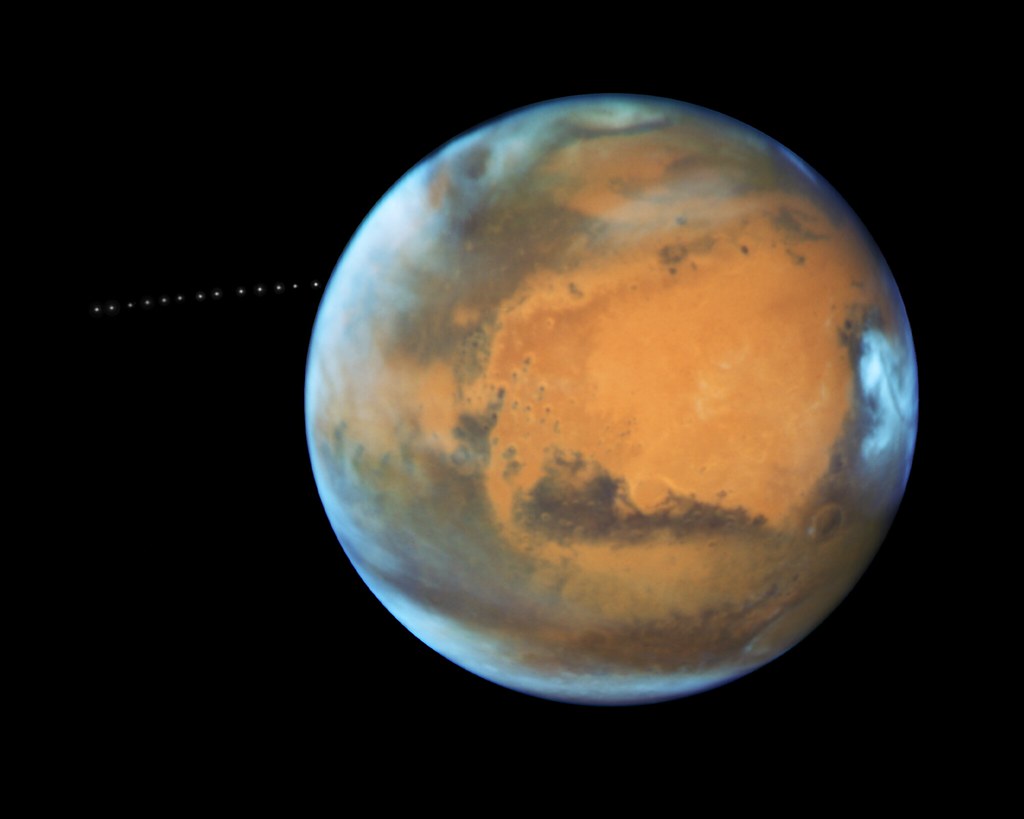
Mars exploration missions have captivated scientists and enthusiasts alike, promising to unlock the mysteries of the Red Planet. This article delves into the most significant missions and programs dedicated to exploring Mars.
Overview of Mars Exploration
Mars exploration missions have captivated scientists and enthusiasts alike, leading to a series of groundbreaking programs aimed at uncovering the mysteries of the Red Planet. Over the decades, numerous missions have provided invaluable data about Mars’ atmosphere, geology, and potential for past or present life.
Some of the most notable Mars exploration missions include:
- Mariner 4: The first successful flyby in 1965, which captured the first images of the Martian surface.
- Viking 1 and 2: Launched in the 1970s, these missions conducted extensive experiments on Martian soil and atmosphere.
- Spirit and Opportunity: Twin rovers that landed in 2004 and vastly increased our understanding of Mars’ geology and past water activity.
- Curiosity: This rover, which landed in 2012, continues to explore Gale Crater, analyzing rock samples for signs of habitability.
- Perseverance: The most recent rover, launched in 2020, aims to search for ancient microbial life and collect samples for future return to Earth.
These missions highlight the ongoing commitment to Mars exploration and the quest to uncover its secrets.
Key Players in Mars Missions
The quest to explore Mars has seen significant contributions from various space agencies around the globe. Each player brings unique expertise and technology to the table, driving forward the ambitious goal of understanding the Red Planet.
- NASA: As a pioneer in Mars exploration missions, NASA has successfully launched rovers like Curiosity and Perseverance, which have provided invaluable data about the planet’s geology and potential for life.
- ESA: The European Space Agency has collaborated with NASA on missions such as the ExoMars program, which aims to search for signs of past life and understand Martian climate and geology.
- ISRO: The Indian Space Research Organisation made history with its Mangalyaan mission, which placed a spacecraft in orbit around Mars, showcasing India’s growing capabilities in space exploration.
- UAE: The United Arab Emirates’ Hope Probe is another significant addition, focusing on Martian atmospheric studies and climate.
These key players continue to push the boundaries of what we know about Mars, making strides in the field of Mars exploration missions.
Mars Rovers: A Closer Look
Mars exploration missions have significantly advanced our understanding of the Red Planet, with rovers playing a crucial role in this endeavor. Among the most notable rovers are:
- Sojourner – The first successful Mars rover, it landed in 1997 and provided valuable data on Martian soil and atmosphere.
- Spirit and Opportunity – These twin rovers, launched in 2003, exceeded their expected lifespan, sending back extensive information about the planet’s geology and potential for past life.
- Curiosity – Launched in 2011, this rover has been instrumental in assessing Mars’ habitability, analyzing rock samples, and studying the planet’s climate and geology.
- Perseverance – The latest addition to the Mars exploration missions, Perseverance landed in 2021 and is tasked with searching for signs of ancient microbial life and collecting rock samples for future return.
Each of these rovers has contributed uniquely to our understanding of Mars, paving the way for future missions and deeper exploration of the Martian landscape.
The Future of Mars Exploration
The future of Mars exploration is poised for significant advancements as various space agencies and private organizations refine their strategies and technologies. Upcoming missions aim to deepen our understanding of the planet’s geology, climate, and potential for past or present life.
Several ambitious programs are set to launch in the coming years, including:
- NASA’s Artemis Program: While primarily focused on returning humans to the Moon, this initiative will pave the way for future crewed missions to Mars.
- NASA’s Mars Sample Return Mission: Targeted for the late 2020s, this mission aims to collect and return samples from the Martian surface, providing invaluable insights.
- ESA’s ExoMars Program: This joint mission with Roscosmos aims to search for biosignatures on Mars and is expected to launch in the next few years.
- SpaceX’s Starship: With plans for crewed missions to Mars in the 2020s, SpaceX aims to revolutionize human exploration of the Red Planet.
These Mars exploration missions promise to unlock new mysteries and expand our horizons about the universe.
Challenges Faced by Mars Missions
Mars exploration missions have encountered numerous challenges that test the limits of technology and human ingenuity. These obstacles can be categorized into various domains:
- Technical Challenges: The harsh environment of Mars, including extreme temperatures and dust storms, poses significant risks to spacecraft and rovers.
- Communication Delays: Signals from Mars take between 4 to 24 minutes to reach Earth, complicating real-time control and data transmission.
- Funding and Budget Constraints: Securing sufficient funding for Mars exploration missions is a constant struggle, often leading to project delays or cancellations.
- Scientific Uncertainty: The search for life and the study of Martian geology require high-risk experiments that may not yield immediate results.
- International Collaboration: Coordinating efforts among various space agencies can be challenging, yet it is often vital for successful missions.
Despite these hurdles, advancements continue to be made, underscoring the resilience of those involved in Mars exploration missions.
Technological Advancements in Space
The realm of Mars exploration missions has witnessed significant technological advancements that have transformed our understanding of the Red Planet. These innovations have not only enhanced mission capabilities but also improved the efficiency and safety of space travel.
Key technological developments include:
- Propulsion Systems: Advanced propulsion technologies, such as ion thrusters, allow for more efficient travel to Mars, reducing fuel consumption and travel time.
- Landing Technologies: Innovations like the Sky Crane landing system used by the Curiosity rover have enabled more precise landings on the Martian surface, ensuring that missions can target specific scientific sites.
- Communication Systems: Enhanced communication technologies facilitate faster data transmission, allowing scientists to receive critical information from Mars in real-time.
- Robotics and Automation: Sophisticated robotics play a vital role in conducting experiments and analyzing samples, minimizing the need for human intervention.
These advancements are crucial for the success of ongoing and future Mars exploration missions, paving the way for deeper insights into the planet’s geology and potential for life.
Public Interest in Mars
The fascination with Mars exploration missions has captivated the public’s imagination for decades. As humanity’s closest planetary neighbor, Mars represents both a challenge and an opportunity for scientific discovery.
Public interest in the Red Planet has surged due to a combination of factors:
- Scientific Discovery: Each mission brings new insights into the planet’s geology, climate, and potential for past life, sparking curiosity among both scientists and the general public.
- Technological Innovation: The advancements made in robotics and engineering for Mars missions often translate into technologies that improve life on Earth, keeping the public engaged.
- Media Coverage: High-profile launches and findings are widely reported, making space exploration a hot topic in news and social media.
- Public Engagement: NASA and other space agencies have successfully engaged the public through interactive platforms, allowing enthusiasts to follow missions in real-time.
As Mars exploration missions continue to evolve, it is clear that the public’s enthusiasm is a crucial component of their ongoing success.
Scientific Discoveries from Mars Missions
Mars exploration missions have significantly enhanced our understanding of the Red Planet, yielding groundbreaking scientific discoveries. These missions have provided insights into Mars’ geology, climate, and potential for past life.
- Evidence of Water: Numerous missions have confirmed the presence of water ice beneath the surface and seasonal dark streaks indicative of briny liquid water flows.
- Organic Molecules: The discovery of organic compounds by the Curiosity rover suggests that the building blocks of life may exist on Mars, raising questions about the planet’s habitability.
- Mars’ Atmosphere: Data from the MAVEN (Mars Atmosphere and Volatile EvolutioN) mission has revealed the loss of the Martian atmosphere over billions of years, helping scientists understand climate change processes.
- Geological Diversity: High-resolution images from various orbiters have unveiled diverse terrain, including volcanoes, valleys, and ancient riverbeds, showcasing Mars’ complex geological history.
Overall, the scientific discoveries from Mars exploration missions continue to shape our understanding of the planet and inspire future research endeavors.
By NASA Goddard Photo and Video via Openverse
Read the original
You might also like

[…] Mars exploration missions: What are the best proven programs? […]